


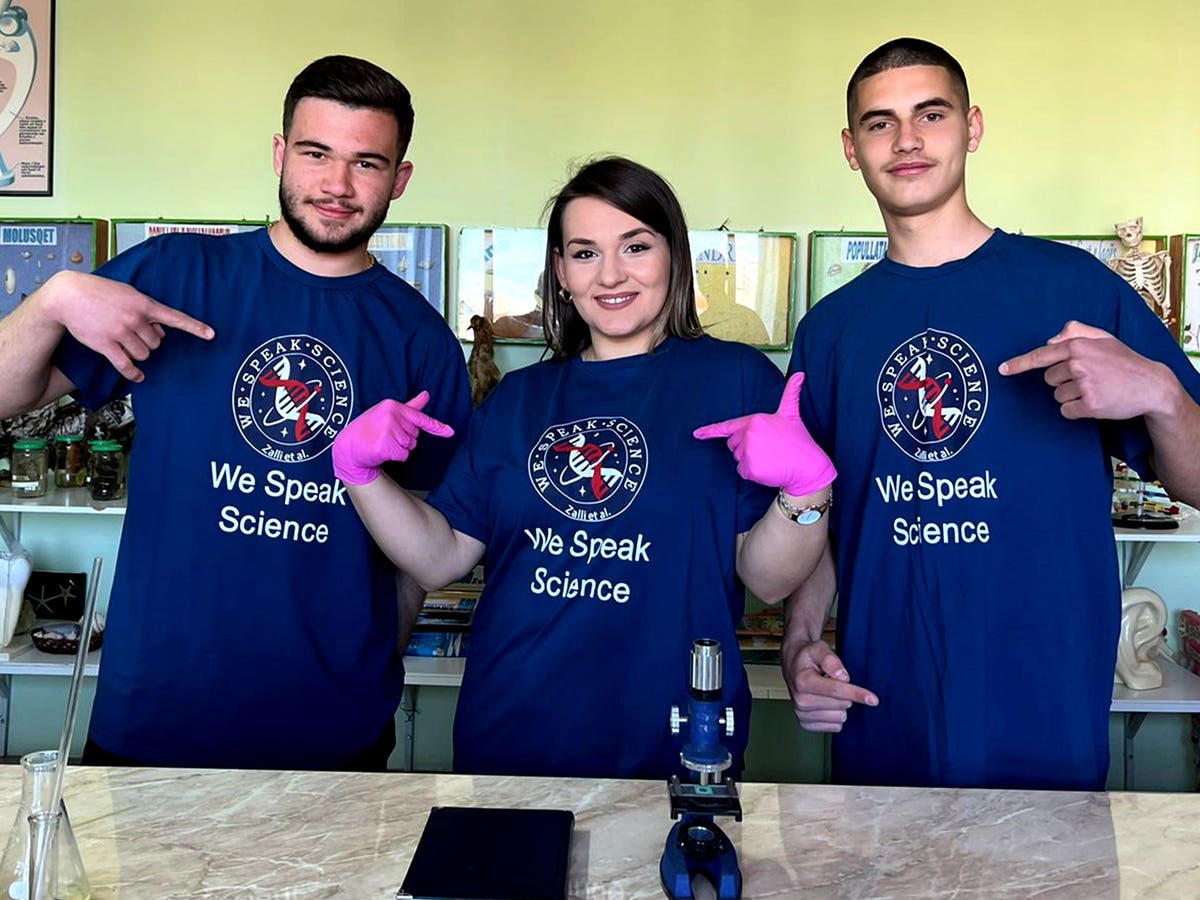
The war in Ukraine, like so many other military conflicts and climate disasters across the globe, has major ramifications in regards to refugee children and their education. I recently met with Detina Zalli, a senior researcher in genomic medicine affiliated with world-leading institutions including Harvard University, the University of Oxford and the University of Cambridge to discuss this issue. Zalli has extensive experience in STEM education, and is a former child refugee herself. Committed to supporting displaced children and other students of low socio-economic status, Zalli has organized STEM events and conducted hundreds of workshops for students featuring faculty from Harvard, MIT, Yale, Oxford and NASA. Her organizations, We Speak Science and the Zalli Foundation, have impacted the lives of over 20,000 students worldwide.
Julia Brodsky: I’ve read your book “Good Morning, Hope: A True Story Of Refugee Twin Sisters And Their Triumph Over War, Poverty And Heartbreak”. I understand that you have first-hand experience regarding the cultural shock of moving to another country as a child refugee. What can you share about the effect of cultural factors on the inclusion of refugee children in schools away from home, and consequently, the quality of their education?
Detina Zalli: When my twin sister and I fled Albania at age thirteen, we were already experiencing high levels of stress, and facing absolute uncertainty. But to make matters more difficult, we also knew almost nothing about England, our new home. Our classmates at school knew very little about Albania. As a result, we were mistreated by our peers and became the victims of bullying and harassment. My personal experience made me especially sensitive to the need for cultural dialogue and education in schools – such dialogue can literally save lives. These days, in addition to my research activities, I teach refugee teens from diverse cultures, from places like the Middle East, Mexico and Ukraine. I facilitate open discussions on cultural diversity to promote understanding and encourage my students to share their experiences, even though they are often sad and tragic. I push them all to ask each other questions. Collaborative group activities help these young people to bond and foster mutual understanding and empathy. I also work on developing my own cultural competency, so I am better able to incorporate culturally relevant materials and activities in my lessons. These initiatives have made it possible for students in the host country to grow more accepting and culturally mature, while refugee students gain a sense of belonging.
Brodsky: What are some of the mental health challenges refugee children in the education system face?
Zalli: Many refugee children suffer from undiagnosed PTSD, anxiety and depression. These conditions can lead to poor academic performance, withdrawal from studies, behavioral issues, health problems, reckless behavior and isolation. Most refugee students need to work with a school counselor to receive both academic and emotional support, especially during the first few years after they arrive. Youngsters need a caring adult whom they can trust and who can teach them to advocate for themselves.
To address students’ mental health needs at our educational project, we implemented a comprehensive program which includes regular counseling sessions with trauma therapists, to help students process their experiences and develop coping strategies. Our regular teachers and staff also receive training regarding the effects of trauma, and I also integrate mindfulness activities into my classes. These steps create a safe environment where displaced students feel comfortable sharing their difficult experiences and developing trust and resilience.
Brodsky: What unique educational challenges do you face in classrooms with many refugee children?
Zalli: The language barrier is the biggest issue. To support students with limited English proficiency, I use visual aids, gestures and simplified language. I also pair these students with fluent English-speaking classmates for cooperative learning activities. Another challenge I face is academic diversity. To meet students’ individual needs, I differentiate instruction by providing more proficient participants with advanced material and delivering extra attention to those who are struggling. This personalized approach ensures every single person’s engagement and progress.
Brodsky: Could you share some innovative approaches and best practices that have been successful in fostering the inclusion of refugee students?
Zalli: Pairing refugee students with compassionate local peer mentors is the strategy that fosters inclusion, and provides emotional support and guidance. The peer support contributes to a sense of belonging, helping the students navigate the challenges of the new school environment more confidently. Not only it benefits displaced students but also promotes empathy, understanding and inclusivity among all classmates. Personally, my sister and I benefited greatly from such support. We became friends with a girl who helped us understand the differences between the British and Albanian educational systems. With her help, our grades improved significantly over the first year. I have never forgotten that relationship.
Another innovative approach I have seen is the value of Artificial Intelligence (AI) in teaching. I have used AI in many of my genomic medicine courses, which has been incredibly successful. Many students have benefited from visual tools and simulations that AI provided, helping students engage with genetic data, understand complex disorders and predict outcomes. It has helped them apply theoretical knowledge to practical situations, and overcome the language barrier as well.
Brodsky: In what ways do refugee students contribute to their new communities?
Zalli: As I direct genomic medicine and life science courses in England through the Zalli Foundation, I witness the social and economic benefits brought about by displaced students. These children and teenagers introduce diverse traditions, languages and perspectives to our classrooms and beyond, broadening our understanding of the world. Interacting with them encourages empathy and tolerance, creating a vibrant and inclusive learning environment. Refugee students demonstrate remarkable resilience and determination in pursuing education despite the challenges they face. Their educational achievements serve as a source of inspiration for their peers, reminding them of the importance of perseverance and dedication in the pursuit of knowledge. As these students grow up, their unique talents and perspectives will undoubtedly contribute to the economic growth and development of their hosting community.
Read the full article here