



Useful leadership lessons can arise from virtually any industry environment; including, most recently, the National Football League.
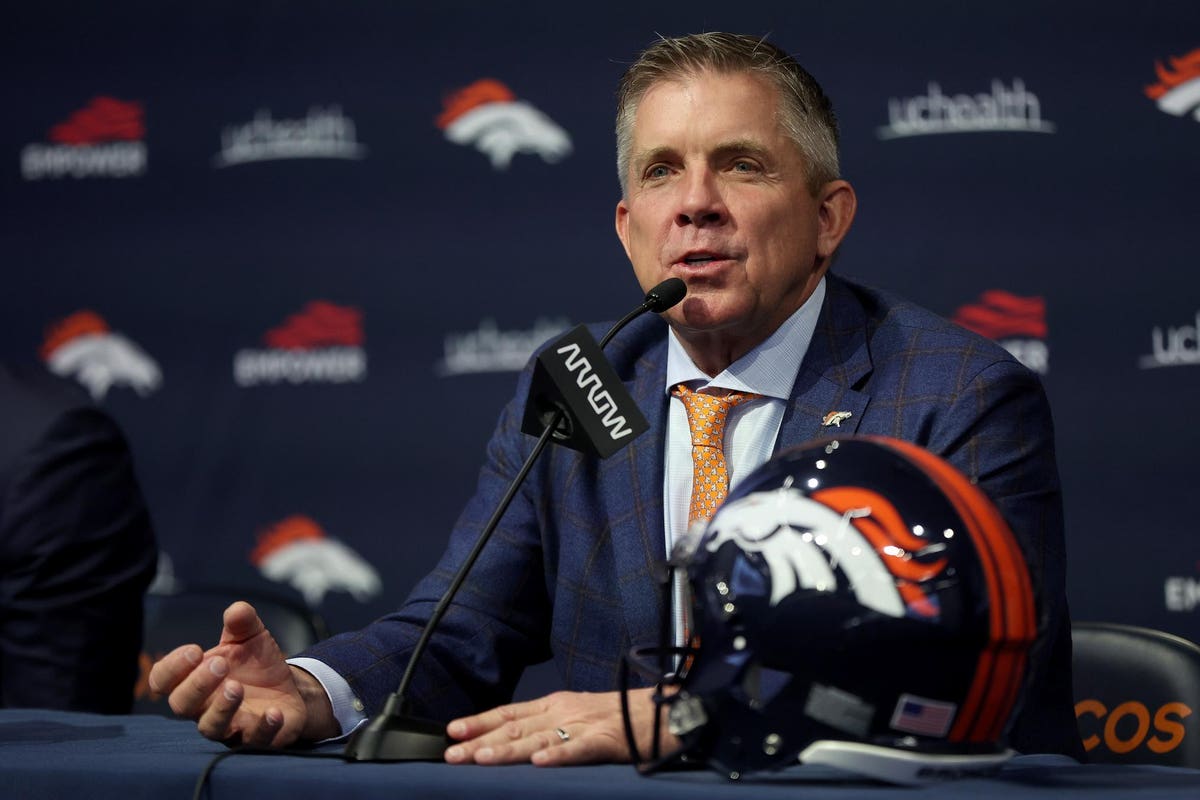
For one of the hottest stories of the preseason isn’t Patrick Mahomes’ ankle, Joe Burrow’s contract or Super Bowl predictions. Rather, it has to do with Broncos coach Sean Payton’s highly public criticism of his predecessor, Nathaniel Hackett. And, as often is the case with pro sports, it offers a notable teaching moment for leadership across industry sectors-especially with the huge uptick in C-Suite turnover.
As most pro football fans know, Mr. Payton is one of the most successful head coaches in league history. He recently signed a long-term contact to take over the Denver Broncos, which suffered through a difficult, losing 2022 season in which they terminated Coach Hackett before the season ended-an unprecedented and fundamentally humiliating move.
In a recent interview with USA Today, Coach Payton made a series of critical comments about former Coach Hackett’s contributions to the disappointing season:
“Everything I heard about last season, we’re doing the opposite”…“It might have been one of the worst coaching jobs in the history of the NFL. That’s how bad it was.”
Wow. No holding back there. And maybe accurate, if you’re a Broncos fan. But definitely not appreciated by former Coach Hackett (it violated the so-called “Coaches’ Code”), by the Jets, his new team, nor by its new quarterback Aaron Rodgers, a Hackett disciple. Locker room “bulletin board fodder”, to be sure.
But in the commercial world, it’s not an altogether uncommon practice. As the business journals frequently report, some new CEOs will resort to criticism of their predecessors, for a variety of reasons-some valid, some questionable. The Sean Payton comments offer a good opportunity to “replay” prior examples, and to re-examine the broader practice. Does it violate “the Code”, as Coach Hackett claimed?
New CEOs may find several reasons to engage in criticism of their predecessor; e.g., to (i) more directly and immediately establish their authority; (ii) to favorably distinguish themselves from their predecessor; (iii) to signal a significant change in corporate culture or strategy; and (iv) to create distance between the new CEO, the company, and a discredited former CEO.
Sometimes this practice works for the benefit of the CEO and the company, and sometimes it doesn’t.
Take, for example, former CNN CEO Chris Licht. His highly controversial criticism of predecessor Jeff Zucker’s performance, in an infamous feature in The Atlantic, was viewed as unfair within the company and contributed significantly to his subsequent termination.
Another example involves the public criticism by FTX’s new chief executive officer, John Ray, of the alleged mismanagement and poor record-keeping by his predecessor Sam Bankman-Fried (who has pleaded not guilty to charges including wire fraud and money laundering).
Different CEOs, different circumstances, different criticisms, different motivations. As these and other examples suggest, whether public criticism of one’s C-Suite predecessor ultimately works is something of a “coin toss” from a governance/leadership perspective.
From the “offensive side of the ball”, it can be a cold but necessary means of cutting the cord with the prior CEO; a page-turner in terms of both corporate culture and public perception. It may send a positive message to segments of the management team and workforce who disliked the former CEO, to consumers who had a negative view of the company, and to segments of the investment community who lacked confidence in that CEO.
But from the “defensive side of the ball” it can be a risky move by the new CEO which could damage both his, and the company’s reputation (i.e., as gratuitous, unfair or mean-spirited); alienate segments of the management team and workforce who valued the former CEO; rock the support of a dedicated consumer base, and create uncertainty amongst segments of the investment community who had confidence in the prior CEO.
Regardless of how the coin toss goes, it must ultimately be the board’s call. That’s the group expected to sign off on how corporate culture is manifested; how “tone at the top “is reflected; and how organizational reputation is preserved. In fact, the issue of how a new CEO deals with his predecessor should initially be raised in the interview process with the board’s executive search committee, and ultimately monitored by the full board.
There’s no “best practice” here, no “sure-fire play “on how a CEO is to deal with his predecessor; it’s a board decision based upon the circumstances that are presented on the field. But in evaluating what’s best for the corporation, CEOs are well advised to consider the wisdom of that famous business visionary, Jimmy Durante:
“Be nice to people on your way up, because you [may] meet them on your way down.”
Oh, and on October 8, the Coach Payton and the Broncos meet Coach Hackett, Aaron Rodgers and the Jets.
Read the full article here