



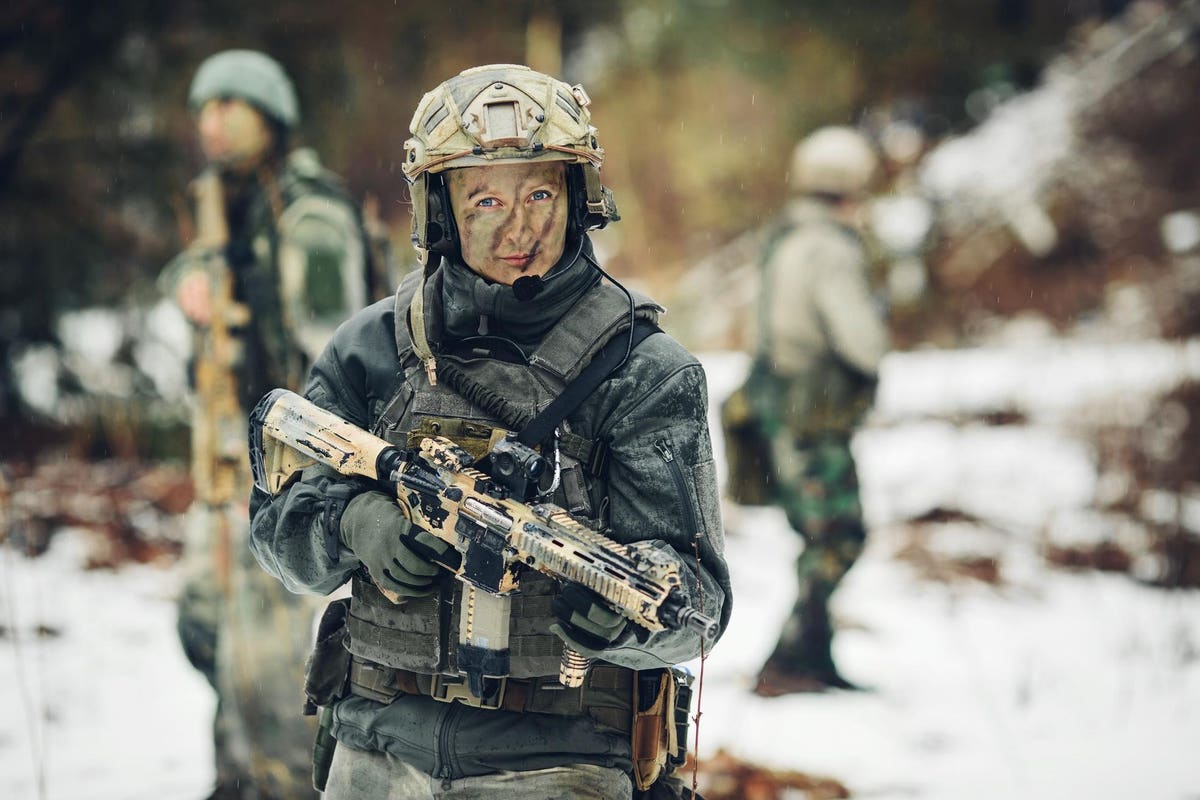
Women serving in the U.S. Army’s elite Special Operation Forces face “blatant sexism,” according to a new study by the US Army Special Operations Command. And nearly half of the women in this military branch must wear equipment that doesn’t fit correctly.
Two thousand three hundred women are serving in Army Special Operation Forces (ARSOF), making up 8% of the community, which includes Special Forces and Rangers. Women have slowly been breaking ground in special operations, and in 2020, the first woman joined the ranks of the elite Green Berets. The Women in Army Special Operations study was conducted in 2021 and released this week.
According to the study, many men still believe women have no place in special operations. One man interviewed described, “Do you think they are pursuing career opportunities? Please. Be honest with yourselves. They are looking for a husband, boyfriend or attention. And they get it. Because the men that choose to lay down their lives and do missions that only great men can do are warriors…Women like warriors.”
Another man chose retirement so he wouldn’t be required to lead a team with a woman. Yet another reported, “We have enough problems and don’t need females to make more.” Some men admitted their spouses may disapprove of working so closely with other women.
Almost half of the men surveyed thought the standards were being lowered for females, but only 9% of women agreed.
Sexual harassment is also rampant; in some units, nearly every woman reported experiencing sexual harassment. Despite this prevalence, the report concluded that “women are simply not reporting sexual harassment.” Women fear retaliation and are concerned that reporting harassment could potentially end their careers.
In addition to the lack of acceptance and harassment, nearly half of female special operations service members also experience equipment fitting challenges. The study concluded, “ill-fitting equipment negatively affects many soldiers’ ability to perform basic soldier skills (i.e., shoot, move, communicate), consequently creating adverse effects on overall lethality and survivability.” In particular, the women complained about challenges with body armor, helmets, ruck systems and urinary devices.
Women also complained that they were called out for wearing leggings to physical training. The leggings were apparently “revealing too much,” and the women wearing them were accused of “showing off your body.” Men in ARSOF frequently wear ranger shorts with no shirt to train, and these can apparently be quite revealing. The women don’t have a problem with the ranger shorts—they merely resent the double standard.
Interestingly, many of the other issues uncovered in the report mirror those that women face in civilian workplaces every day. For example, women report not being heard. “I pitch an idea, and no one listens, but when a guy says it, it’s heard,” one woman described. Another said, “At a recent meeting, there were intros, and they just skipped me.”
The phenomenon of a man repeating a woman’s ideas and then receiving praise for those same ideas is so common it was given a label—”hepeating.” Research shows that not only do men receive credit for their ideas, but they receive a status bump for sharing them. Women have no such benefit when they speak up.
Women in the ARSOF also report that they are penalized for behaving in an aggressive manner. “When a man is aggressive, he’s strong, but if I am, I’m a bitch,” one woman in special operations described. Leaders are generally expected to be confident and assertive, yet women who behave this way can be judged more harshly. Past research has shown women are penalized at work for their ambition, for behaving assertively, or even for asking for higher pay, all because these attributes and activities are perceived as appropriate for men but not women.
Women also reported that their work was under more scrutiny than their male peers. They felt the need to prove themselves, to be perfect—as if they couldn’t have a bad day. “I have to work double for the same amount of respect,” one woman reported. Once again, research reveals that most women feel that they must work harder because they face stricter performance standards than men do.
Although women in many workplaces share the complaints of the ARSOF women, the situations tend to be worse in male-dominated workplaces. The issues are likely exacerbated in special operations due to the lack of women present.
While the situation for women in special operations may seem dire, identifying problems is a critical first step in addressing them. The study highlighted some initial steps to address the issues, including education, training and social support for women.
Read the full article here