



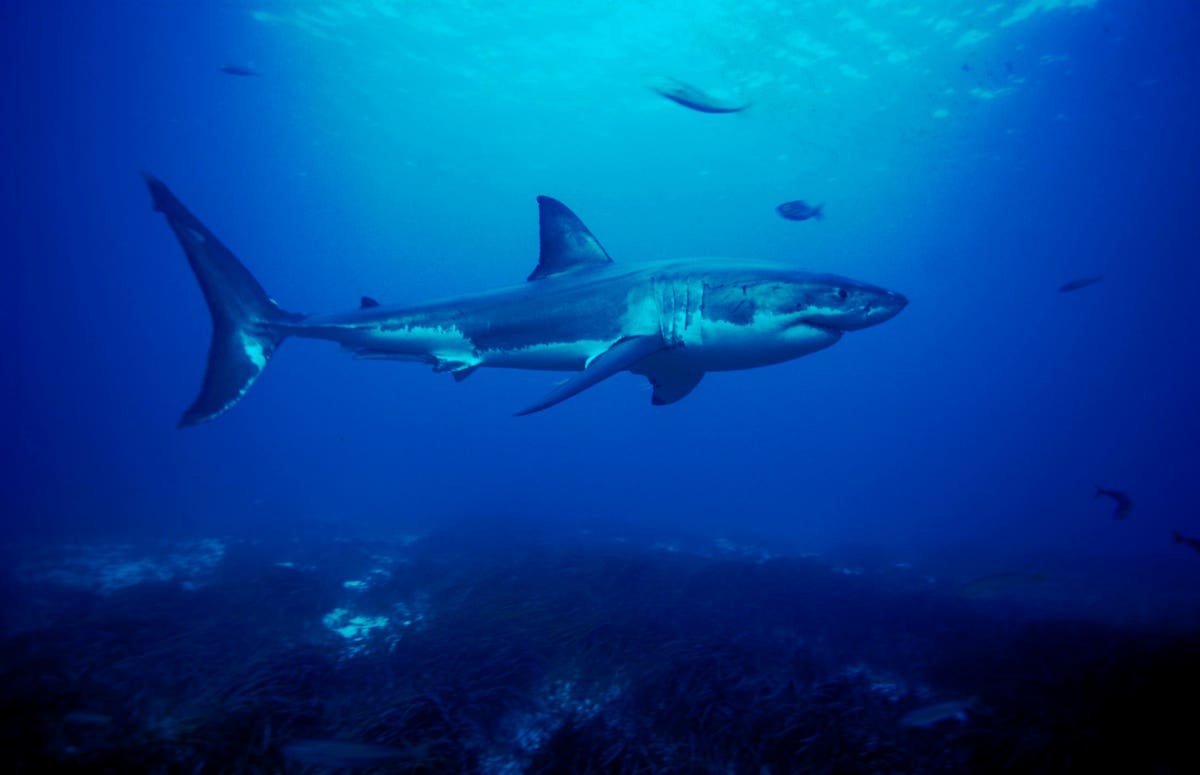
It’s a tale as old as time: great white sharks (Carcharodon carcharias) are solitary wanderers. An iconic predator known for their massive size, power, and distinctive appearance, these animals belong to the Lamnidae family and are one of the largest predatory sharks in existence. Known to inhabit a wide range of oceanic environments, including coastal waters and offshore areas, they are found in temperate and sometimes even tropical waters around the world. Classified as vulnerable by the International Union for Conservation of Nature (IUCN), they face numerous threats (including overfishing, habitat degradation, and accidental bycatch). Despite their fierce reputation, great white sharks still hold close many secrets that scientists are trying to unravel – including their relationship with other animals.
Once thought to be solitary animals that traverse the azure waters alone in pursuit of sustenance and occasional companionship (to, you know, mate), this makes the recent discovery surrounding two sharks, named Simon and Jekyll, all the more captivating.
Since being outfitted with tracking devices by marine biologists in December near the coast of the USA state of Georgia, Simon and Jekyll have embarked on an extraordinary voyage spanning more than 4,000 miles. Their synchronized migration has led them north through the Atlantic Ocean, eventually reaching the Gulf of St. Lawrence near Quebec by late July. Simon last pinged his last location on August 11, while Jekyll has not pinged his since July 18. Dr. Bob Hueter, chief scientist for OCEARCH, the organization behind tracking the sharks, expressed his astonishment, stating, “They’ve taken an unusually synchronous path north. It’s the first time we’ve seen something like this, and it’s very interesting. It’s mysterious, and it’s exciting.”
The intriguing behavior of Simon and Jekyll has ignited an unique question: could these sharks be friends?
While the social behaviors of sharks are less well-known compared to some other animals, there is evidence to suggest that certain shark species do exhibit social interactions and group behaviors to varying degrees. Grey reef sharks (Carcharhinus amblyrhynchos), for example, are known for their aggregating behavior. Research has shown that these sharks can form relatively stable groups at certain reef sites, and these aggregations can persist for months or even years, possibly serving various purposes, such as reducing the risk of predation or facilitating courtship. Nurse sharks (Ginglymostoma cirratum) and whitetip reef sharks (Triaenodon obesus) are also seen observed resting in groups on the ocean floor during the day, showcasing a level of tolerance to coexist peacefully in close proximity. Silvertip sharks (Carcharhinus albimarginatus) are also known for their schooling behavior, particularly around seamounts and underwater features. For great white sharks, tracking data has revealed temporary associations between individuals in certain areas, such as seal colonies. So perhaps this is a friendship captured via science. And could there be other sharks accompanying them, untagged? Or could they be related as siblings or half-siblings?
To unravel this mystery, scientists at OCEARCH are conducting genetic testing to determine if Simon and Jekyll share a familial connection. Regardless of their relationship, the duo’s unprecedented behavior prompts scientists to explore new avenues of inquiry, seeking a deeper comprehension of these vulnerable species. “White sharks were already more complex than we used to think they were,” Hueter told the Daily Mail. “Now this adds a whole new element of sort of a familial and social component to migration.” Hueter also said that the sharks, both juvenile males, stayed between 10 and 100 miles of each other at all times. Named after the islands near the Georgia coast where they were tagged—St. Simons Island and Jekyll Island—are estimated to be between 10 and 15 years old.
Beyond its scientific implications, the revelation that sharks might engage in social interactions holds potential implications for conservation efforts. The discovery of Simon and Jekyll’s companionship, Hueter believes, might humanize these creatures. “They have siblings. They have a mother. They have a father,” he told the New York Times. “They’re just trying to make a living in the ocean, and we need them for the balance of life in the sea.” Regardless, Simon and Jekyll offer valuable insights into the social behaviors of sharks, a field that is still largely shrouded in mystery. Their unique journey adds to the growing knowledge base, further expanding our understanding of these icons.
Read the full article here